
Bring colour back into your everyday with cataract surgery in Windhoek

Discover how replacing the cloudy lens can help improve clarity and make everyday activities easier.

Bring colour back into your everyday with cataract surgery in Windhoek

Discover how replacing the cloudy lens can help improve clarity and make everyday activities easier.

Rediscover clearer vision with cataract surgery

Learn more about treatment, and how it could help you enjoy everyday life with greater visual clarity.

See clearly again without the cloudiness

Cataracts can make vision feel less clear and reliable, with colours appearing duller and everyday tasks becoming harder than they used to be. You may find yourself relying on increasingly strong glasses or struggling to see details as clearly as before. Cataract surgery replaces the cloudy natural lens with a clear artificial lens. For suitable patients, this can help restore clearer, brighter vision and make daily activities such as reading, driving, walking and enjoying the outdoors feel easier again.

Feel confident in your vision again

When your vision keeps changing, it can be frustrating and unsettling. You may worry that your sight will continue to deteriorate or feel frustrated by needing stronger glasses and adapting to changing prescriptions. Cataract surgery can offer a clear path forward for suitable patients. With improved vision, you can feel more confident about what you see, less frustrated by everyday visual challenges and reassured that you have taken action to improve your sight and quality of life.

Get back to enjoying your day

Imagine waking up and simply getting on with your day without your vision getting in the way. You head out for a morning walk or yoga session, enjoy a coffee with friends, read comfortably, and see the colours around you more clearly. Later, you might play a round of golf, cycle, travel or enjoy dinner with family. Instead of thinking about changing prescriptions or struggling to see, your attention is where it belongs: on enjoying the day.

See someone who is confident and fully engaged

When your vision no longer feels like a daily limitation, the people around you may notice a difference too. Instead of constantly adjusting glasses, asking others to help you see something or hesitating over activities that have become harder, you can feel more independent and engaged. Friends and family may see you enjoying outings, travelling, spending time with loved ones and pursuing the activities you enjoy with renewed confidence and enthusiasm.

Rediscover clearer vision with cataract surgery

Learn more about treatment, and how it could help you enjoy everyday life with greater visual clarity.

See clearly again without the cloudiness

Cataracts can make vision feel less clear and reliable, with colours appearing duller and everyday tasks becoming harder than they used to be. You may find yourself relying on increasingly strong glasses or struggling to see details as clearly as before. Cataract surgery replaces the cloudy natural lens with a clear artificial lens. For suitable patients, this can help restore clearer, brighter vision and make daily activities such as reading, driving, walking and enjoying the outdoors feel easier again.

Feel confident in your vision again

When your vision keeps changing, it can be frustrating and unsettling. You may worry that your sight will continue to deteriorate or feel frustrated by needing stronger glasses and adapting to changing prescriptions. Cataract surgery can offer a clear path forward for suitable patients. With improved vision, you can feel more confident about what you see, less frustrated by everyday visual challenges and reassured that you have taken action to improve your sight and quality of life.

See someone who is confident and fully engaged

When your vision no longer feels like a daily limitation, the people around you may notice a difference too. Instead of constantly adjusting glasses, asking others to help you see something or hesitating over activities that have become harder, you can feel more independent and engaged. Friends and family may see you enjoying outings, travelling, spending time with loved ones and pursuing the activities you enjoy with renewed confidence and enthusiasm.

Get back to enjoying your day

Imagine waking up and simply getting on with your day without your vision getting in the way. You head out for a morning walk or yoga session, enjoy a coffee with friends, read comfortably, and see the colours around you more clearly. Later, you might play a round of golf, cycle, travel or enjoy dinner with family. Instead of thinking about changing prescriptions or struggling to see, your attention is where it belongs: on enjoying the day.

Clearer vision after cataracts in 3 simple steps

Cataracts gradually make your vision cloudy and dull. Surgery removes the cloudy lens and replaces it with a clear artificial lens. We guide you through each stage

Step 1: Get in touch

The first step is to get a clear answer on which cataract treatment options (like the option to restore your reading vision) will suit you best. Give our friendly team a call on +264 83 727 9300 or use our contact form to request a callback.

Step 2: We’ll meet

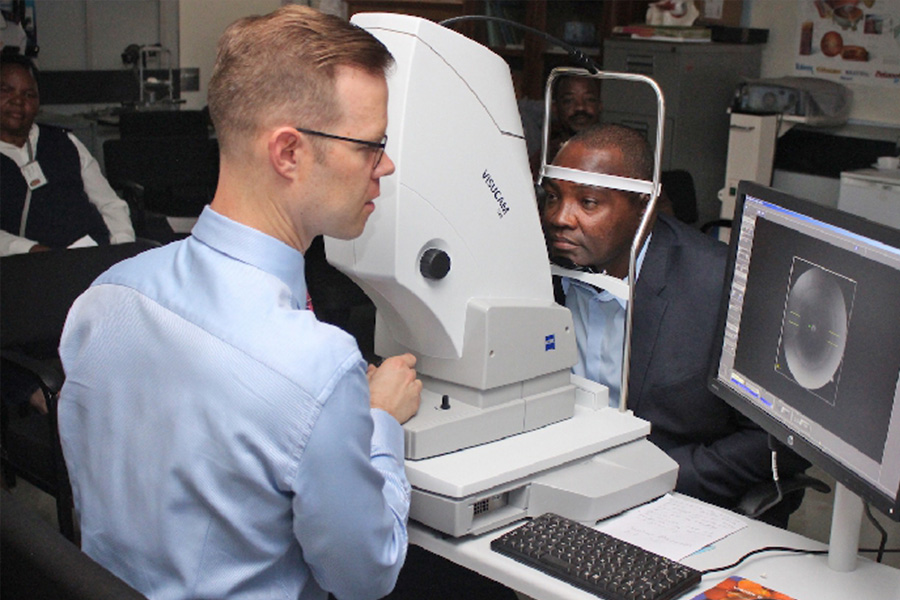
At your appointment , we’ll answer your questions and give you a clear and honest recommendation based on your lifestyle. You’ll leave with a confident understanding of the best cataract treatment option for your unique eyes.

Step 3: Enjoy Freedom

After treatment, thousands of people across the country tell us how thrilled they are by the restored clarity of their vision. Those that also choose the option to restore their reading vision, tell us how young they feel now that they can read again without glasses. Most people say that they wish they had done it years earlier!

Take the first step towards clearer vision after cataracts

Book an appointment to learn how cataract surgery can remove your cloudy lens and help restore clearer sight.

Take the first step towards clearer vision after cataracts

Request a callback to learn how cataract surgery can remove your cloudy lens and help restore clearer sight.

Rediscover clearer vision with cataract surgery

Learn more about the treatment, what to expect and how it could help you enjoy everyday life with greater visual clarity.

Cataract surgery may be suitable when a cataract is affecting your vision and making everyday life more difficult. There is no single level of eyesight that means you need surgery. Instead, your eye specialist will consider how your vision affects your daily activities, your eye health, your symptoms and your personal needs. Before treatment, your eyes will be examined and measured to help determine whether surgery is appropriate and which artificial lens may suit you. Your specialist will also discuss the expected benefits, possible risks and alternatives, so you can make an informed decision about your treatment.
Cataract surgery removes the cloudy natural lens inside your eye and replaces it with a clear artificial lens called an intraocular lens. The procedure is usually performed under local anaesthetic, so you remain awake but should not feel pain. Your surgeon makes a tiny opening in the eye and uses ultrasound to break up the cloudy lens before removing it. The new artificial lens is then placed inside the natural lens capsule, where it stays in position. The procedure usually takes around 20 to 45 minutes, and most people return home the same day.
The main advantage of cataract surgery is the potential for clearer vision when a cataract is affecting your sight. Colours may appear brighter, details can become easier to see and everyday activities may feel more manageable. Many people also find they are less dependent on their previous glasses prescription, although glasses may still be needed for some activities. Surgery is generally successful and recovery is usually quick. However, it is still an operation, so there are possible complications and results vary between individuals. You may also experience temporary blurred vision, discomfort or increased sensitivity to light while your eye heals.
Cataract surgery is generally safe and serious complications are uncommon, but every operation carries some risk. Possible complications include infection, bleeding, inflammation, retinal detachment or problems with the position of the artificial lens. Vision can sometimes remain blurry or develop other changes, such as glare, shadows or areas of reduced vision. Some people develop cloudiness behind the artificial lens months or years after surgery, known as posterior capsule opacification (PCO). Some complications may require additional treatment or surgery. Your surgeon will assess your individual circumstances and explain the relevant risks before you decide whether to proceed.
If your cataract is not significantly affecting your daily life, surgery may not be needed immediately. Stronger glasses, better lighting and other practical adjustments may help for a while. However, these options do not remove the cataract itself. Cataract surgery is currently the only treatment that removes the cloudy natural lens. If surgery is appropriate, your specialist can also discuss different artificial lens options based on your eyes, vision and lifestyle.
Your journey starts with a detailed eye assessment, where your eyes are examined and measured and your treatment options are discussed. Before surgery, your pupil is dilated and your eye is numbed with local anaesthetic. During the procedure, your surgeon makes a tiny opening in the eye, breaks up and removes the cloudy lens, and places the new artificial lens inside the natural lens capsule. The operation usually takes 20 to 45 minutes. After surgery, you will receive instructions for your recovery and eye drops to help your eye heal and reduce the risk of infection.
For most people, cataract surgery improves vision that has been affected by a cataract. As your eye heals, vision can become clearer and colours may appear brighter. Everyday activities such as reading, driving or enjoying time outdoors may become easier, depending on your individual vision and eye health. Your final result depends on factors including the health of your eye and the type of artificial lens selected. You may still need glasses for some tasks after surgery. Your vision can take several days to improve, while your eye continues healing over the following weeks.

Is worsening vision starting to affect your independence?

If cataracts, changing prescriptions and reading glasses are making daily life harder, booking a cataract assessment can help you understand what is changing and which treatment options may suit you.


Are stronger glasses no longer giving you the clear vision you want?

You may have updated your prescription several times, bought new reading glasses and invested in better lenses, yet your vision still feels less clear than it once did. Colours may look duller and simple tasks can feel harder. This is a common concern for the 65+ cataract patient described in your ideal client profile.

A cataract assessment can confirm what is causing the change in your vision. If cataracts are the cause, surgery is the only way to remove them. Your surgeon can also explain the lens options available and what level of glasses dependence you may expect afterwards.

Are you starting to avoid things you used to enjoy?

Reading in low light can become harder. Road signs may look less clear. Glare can make night driving uncomfortable. You may even find yourself avoiding some journeys altogether. Your patient profile highlights how these small changes can make the world feel less clear and less vibrant.

Cataract surgery removes the cloudy natural lens and replaces it with a clear artificial lens. The aim is to restore clearer vision so everyday activities such as reading, driving, travelling and spending time with family feel easier again.

Are you worried your eyesight could take away your independence?

It is understandable to feel concerned when your vision starts to affect driving, reading, recognising faces or enjoying time outdoors. Many people also worry about complications, choosing the wrong lens or making the wrong decision about surgery. These concerns are reflected strongly in the profile you shared.

A detailed assessment gives you the chance to understand your cataracts, discuss the risks and compare your lens choices. The goal is to help you make an informed decision and protect the independence and active lifestyle that matter to you.

Which cataract surgery option could be right for you?

Take our free 2-minute self-test to explore the lens options that may best suit your eyes, vision needs and lifestyle.

Which cataract surgery option could be right for you?

Take our free 2-minute self-test to explore the lens options that may best suit your eyes, vision needs and lifestyle.

Trusted expertise, backed by professional affiliations

We are proud to be connected with respected professional bodies in eye care.

Academic resources on cataract surgery

Explore trusted medical and academic sources to learn more about cataracts, cataract surgery and artificial lens options. These links will take you away from our website

In cataracts, the eye’s lens gradually becomes cloudy. During surgery, it is replaced with an artificial lens, often restoring vision. Important: choosing the right type of lens.
This study compared visual outcomes, quality of vision and patient satisfaction across three types of multifocal intraocular lenses (bifocal mix-and-match, EDOF, and trifocal) after cataract surgery.
This page explains what cataract surgery involves, who may need it, lens options, recovery expectations, risks, and when to speak with an eye specialist. Read more.

Dr  Sven  Obholzer

MBChB (Stell), MMed Ophth (Stell), FC Ophth (SA)

I’m a specialist ophthalmologist with more than 14 years of experience in eye care and microsurgery. I trained at Stellenbosch University and Tygerberg Hospital in Cape Town, where I completed my Master’s Degree in Ophthalmology and Fellowship of the College of Ophthalmologists of South Africa. My main areas of interest include retinal surgery, cataract surgery and anterior segment surgery. As founder of the Namibia Eye Institute, I use modern surgical techniques and advanced technology. My focus is simple: to provide careful, evidence-based treatment that is tailored to each patient.