
Keep glaucoma from getting in the way of your vision

Glaucoma is a group of eye conditions that damage your optic nerve and gradually reduce your vision.

Keep glaucoma from getting in the way of your vision

Glaucoma is a group of eye conditions that damage your optic nerve and gradually reduce your vision.

Glaucoma is often known as the ‘silent thief of sight’

Understand the signs and risks of glaucoma and learn how early detection can help protect your vision.

Glaucoma is a group of eye conditions that damage the optic nerve and can cause permanent vision loss. It is often associated with increased pressure inside the eye, but glaucoma can also occur when eye pressure is within the normal range. The optic nerve carries visual information from your eye to your brain, so damage to it can gradually affect your sight. Glaucoma can develop slowly and may not cause noticeable symptoms in its early stages. This is why regular eye examinations are important, particularly if you have a higher risk of developing glaucoma.
Glaucoma is a common eye condition and one of the leading causes of irreversible vision loss worldwide. The risk of developing glaucoma increases with age, although it can affect people of different ages. Your risk may also be higher if you have a close family member with glaucoma. Because some types of glaucoma can develop without noticeable symptoms, many people may not realise they have the condition until an eye examination detects it. Regular eye checks can help identify glaucoma earlier, when treatment and monitoring can help protect the vision you still have.
Glaucoma is caused by damage to the optic nerve. In many cases, this damage is linked to increased pressure inside the eye. Eye pressure can rise when the fluid inside the eye cannot drain properly. However, glaucoma can also develop when eye pressure is within a normal range. Several factors can increase your risk, including age, family history and certain eye or health conditions. There are different types of glaucoma, including open-angle and angle-closure glaucoma, and they can have different causes. An eye examination can help identify potential risk factors and signs of optic nerve damage.
Glaucoma is diagnosed through a comprehensive eye examination rather than through symptoms alone. An ophthalmologist may measure the pressure inside your eyes, examine the optic nerve and test your peripheral vision. Additional tests and scans can also be used to assess the structure of the optic nerve and look for changes over time. These tests help your eye specialist determine whether glaucoma is present, assess its severity and monitor how your eyes change. Because glaucoma can develop without obvious symptoms, regular eye examinations are particularly important if you have risk factors or a family history of the condition.
Glaucoma treatment focuses on lowering or controlling eye pressure to help prevent further damage to the optic nerve and protect your remaining vision. Treatment may include prescription eye drops, laser treatment or glaucoma surgery, depending on the type and severity of the condition. Your ophthalmologist will consider your eye health and individual circumstances when recommending treatment. Treatment cannot normally restore vision that has already been lost because of glaucoma, but appropriate management can help slow the progression of the condition. Specialist glaucoma assessment and treatment are available in Windhoek for patients who require care.

Take the first step towards clearer, healthier vision

Request an appointment to understand your eyes, explore your options and find out what treatment may be right for you.

Take the first step towards clearer, healthier vision

Request an appointment to understand your eyes, explore your options and find out what treatment may be right for you.

See your best in 3 simple steps 

Your eye health matters. We make your journey from your first assessment to better vision clear, simple and personal

Step 1: Get in touch

Every pair of eyes is different, so the right treatment depends on your vision, eye health, lifestyle and goals. Get in touch with our friendly team to arrange your initial assessment and find out how we can help.

Step 2: We’ll meet 

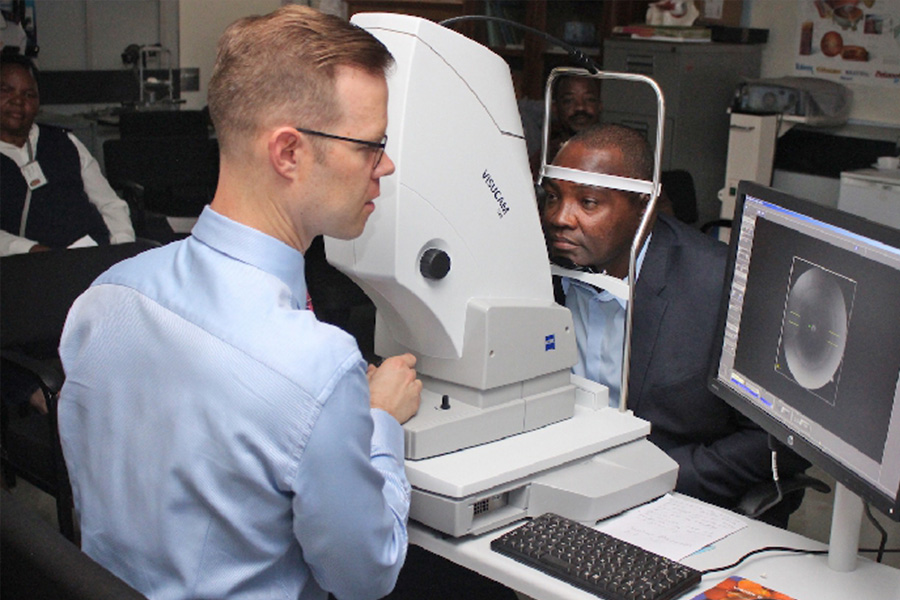
At your assessment, we’ll take the time to understand your needs and examine your eyes in detail. We’ll explain your options, answer your questions and recommend the most suitable treatment for you. You’ll leave with a clear understanding of the next step and what to expect.

Step 3: Enjoy Freedom

Once your treatment is complete, you can look forward to the lasting benefits of clearer, more comfortable vision. Whether your goal is greater freedom from glasses, improved everyday vision or better eye health, we’re here to support you throughout your journey.

The difference better vision can make

Discover how the right eye care has helped our patients see and live with greater confidence.

We have replaced the images of real patients who provided these testimonials to protect their privacy.

Dr  Sven  Obholzer

MBChB (Stell), MMed Ophth (Stell), FC Ophth (SA)

I’m a specialist ophthalmologist with more than 14 years of experience in eye care and microsurgery. I trained at Stellenbosch University and Tygerberg Hospital in Cape Town, where I completed my Master’s Degree in Ophthalmology and Fellowship of the College of Ophthalmologists of South Africa. My main areas of interest include retinal surgery, cataract surgery and anterior segment surgery. As founder of the Namibia Eye Institute, I use modern surgical techniques and advanced technology. My focus is simple: to provide careful, evidence-based treatment that is tailored to each patient.