
Glaucoma treatment designed around your vision
Discover how personalised treatment can help manage glaucoma and support your long-term eye health.

Glaucoma treatment designed around your vision
Discover how personalised treatment can help manage glaucoma and support your long-term eye health.
Understanding glaucoma can help you protect your vision
Discover how glaucoma affects your eyes, how it can be treated and what you can do to help protect your sight
Take the first step towards clearer, healthier vision
Request an appointment to understand your eyes, explore your options and find out what treatment may be right for you.
Take the first step towards clearer, healthier vision
Request an appointment to understand your eyes, explore your options and find out what treatment may be right for you.


See your best in 3 simple steps
Your eye health matters. We make your journey from your first assessment to better vision clear, simple and personal

Step 1: Get in touch
Every pair of eyes is different, so the right treatment depends on your vision, eye health, lifestyle and goals. Get in touch with our friendly team to arrange your initial assessment and find out how we can help.
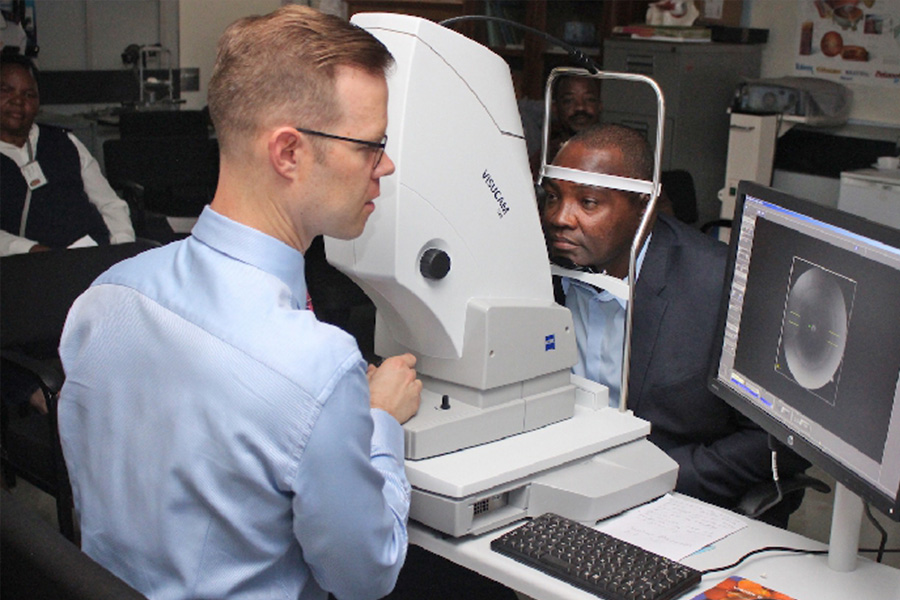
Step 2: We’ll meet
At your assessment, we’ll take the time to understand your needs and examine your eyes in detail. We’ll explain your options, answer your questions and recommend the most suitable treatment for you. You’ll leave with a clear understanding of the next step and what to expect.

Step 3: Enjoy Freedom
Once your treatment is complete, you can look forward to the lasting benefits of clearer, more comfortable vision. Whether your goal is greater freedom from glasses, improved everyday vision or better eye health, we’re here to support you throughout your journey.
The difference better vision can make
Discover how the right eye care has helped our patients see and live with greater confidence.

★ ★ ★ ★ ★
“From the telephone call to walking into reception, meeting the assistants, and finally seeing Dr Sven, it was such a wonderful experience. The staff are amazing, and Dr Sven is just as amazing. I found him on Google, and to whoever is reading this, book with him! Such a calm and lovely experience.”
★ ★ ★ ★ ★
“Thank you so much for taking such great care of my mom. I really appreciate your willingness to help so quickly, and we are so grateful for your fantastic skill and expertise. ”
★ ★ ★ ★ ★
“The level of skill, professionalism, flexibility, and service provided by Dr Sven, senior optometrist Shaarla, and the staff have been exceptionally high. Dr Sven and Shaarla went above and beyond to help diagnose the effects of the injury and provide initial treatment, using state-of-the-art equipment and methods. ”
We have replaced the images of real patients who provided these testimonials to protect their privacy.

Dr Sven Obholzer
MBChB (Stell), MMed Ophth (Stell), FC Ophth (SA)
I’m a specialist ophthalmologist with more than 14 years of experience in eye care and microsurgery. I trained at Stellenbosch University and Tygerberg Hospital in Cape Town, where I completed my Master’s Degree in Ophthalmology and Fellowship of the College of Ophthalmologists of South Africa. My main areas of interest include retinal surgery, cataract surgery and anterior segment surgery. As founder of the Namibia Eye Institute, I use modern surgical techniques and advanced technology. My focus is simple: to provide careful, evidence-based treatment that is tailored to each patient.