

When dry eyes become more than a passing problem

Dry eye and blepharitis can cause ongoing dryness, irritation, redness and discomfort, with symptoms that may come and go or persist over time.

When dry eyes become more than a passing problem

Dry eye and blepharitis can cause ongoing dryness, irritation, redness and discomfort, with symptoms that may come and go or persist over time.

More than 40% of people in Africa experience dry eye

Learn more about the symptoms, causes and differences between these two common conditions.

Dry eye occurs when your eyes do not produce enough tears, or when tears evaporate too quickly. This can leave the surface of the eye dry and irritated, causing symptoms such as burning, grittiness, redness, watering and blurred vision. Dry eye can have several causes, including age, contact lens use, certain medications, environmental factors and eyelid conditions such as blepharitis.
Blepharitis is inflammation of the eyelid margins, often causing red, swollen, itchy or sore eyelids. You may also notice crusting or flakes around the eyelashes, particularly when you wake up. Blepharitis can come and go and may affect the glands in the eyelids that help keep the tear film stable.
Dry eye mainly affects the tear film and surface of the eye, while blepharitis affects the eyelids and the area around the eyelashes. However, the two conditions are closely linked. Blepharitis can affect the glands that produce the oily part of your tears, causing tears to evaporate more quickly and contributing to dry eye symptoms. It is also possible to have both conditions at the same time.
Both conditions can cause irritation, burning, grittiness, redness, watering and blurred vision. Blepharitis is more likely to cause symptoms around the eyelids, such as itching, soreness, swelling or crusting around the eyelashes. Dry eye can cause a scratchy or burning feeling and may make your eyes feel tired or uncomfortable, particularly during activities such as reading or using screens.
There is not always one single cause. Dry eye can be linked to reduced tear production, faster tear evaporation, ageing, contact lens use, environmental conditions, medications and other eye or health conditions. Blepharitis can be associated with problems affecting the eyelid glands, skin conditions and inflammation around the eyelid margins. Because the conditions can influence each other, identifying what is contributing to your symptoms is an important part of an eye assessment.
An eye specialist can assess your symptoms, eyelids and the surface of your eyes to determine what may be causing your discomfort. Depending on your symptoms, your examination may include checking the eyelid margins, tear film and how quickly your tears evaporate or how well your eyes produce tears. This can help distinguish between dry eye, blepharitis and other conditions that can cause similar symptoms.
Yes. Treatment depends on the underlying cause and whether you have dry eye, blepharitis or both. Management may include eyelid care, lubricating eye drops and other treatments recommended by your eye specialist. Blepharitis is often a long-term condition that can come and go, so ongoing eyelid care may be important for keeping symptoms under control. At Namibia Eye Institute we can recommend an approach based on your individual needs.

Take the first step towards clearer, healthier vision

Request an appointment to understand your eyes, explore your options and find out what treatment may be right for you.

Take the first step towards clearer, healthier vision

Request an appointment to understand your eyes, explore your options and find out what treatment may be right for you.

See your best in 3 simple steps 

Your eye health matters. We make your journey from your first assessment to better vision clear, simple and personal

Step 1: Get in touch

Every pair of eyes is different, so the right treatment depends on your vision, eye health, lifestyle and goals. Get in touch with our friendly team to arrange your initial assessment and find out how we can help.

Step 2: We’ll meet 

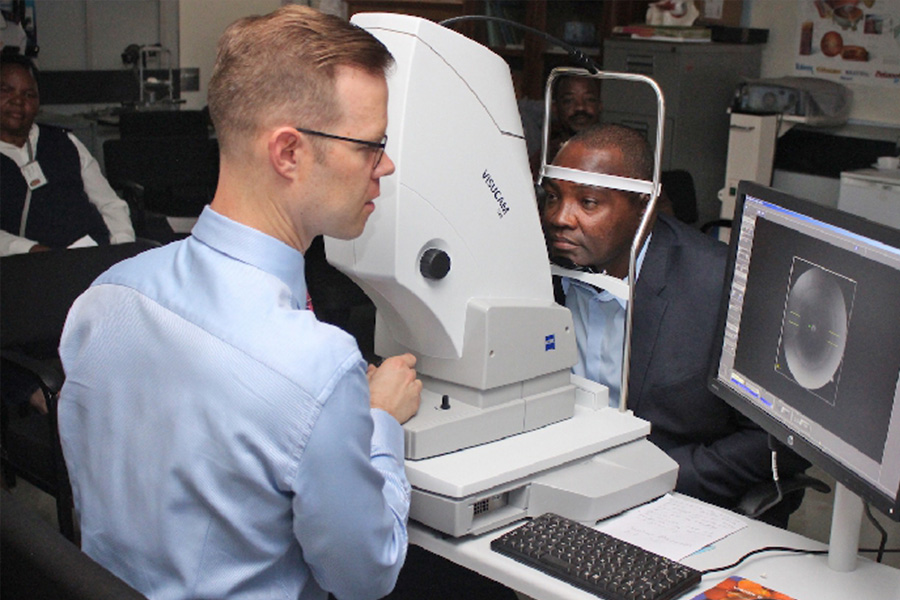
At your assessment, we’ll take the time to understand your needs and examine your eyes in detail. We’ll explain your options, answer your questions and recommend the most suitable treatment for you. You’ll leave with a clear understanding of the next step and what to expect.

Step 3: Enjoy Freedom

Once your treatment is complete, you can look forward to the lasting benefits of clearer, more comfortable vision. Whether your goal is greater freedom from glasses, improved everyday vision or better eye health, we’re here to support you throughout your journey.

The difference better vision can make

Discover how the right eye care has helped our patients see and live with greater confidence.

We have replaced the images of real patients who provided these testimonials to protect their privacy.

Dr  Sven  Obholzer

MBChB (Stell), MMed Ophth (Stell), FC Ophth (SA)

I’m a specialist ophthalmologist with more than 14 years of experience in eye care and microsurgery. I trained at Stellenbosch University and Tygerberg Hospital in Cape Town, where I completed my Master’s Degree in Ophthalmology and Fellowship of the College of Ophthalmologists of South Africa. My main areas of interest include retinal surgery, cataract surgery and anterior segment surgery. As founder of the Namibia Eye Institute, I use modern surgical techniques and advanced technology. My focus is simple: to provide careful, evidence-based treatment that is tailored to each patient.